Weight loss is a biological process, not a moral test. Stop blaming your character for a system your body is hardwired to defend. If you've been searching for weight loss without dieting UK, you've likely realised that the standard advice to "eat less" rarely works long-term. It's frustrating. It's exhausting. And for many, it's clinically ineffective.
We understand the shame that follows failed attempts and the relentless food noise that makes traditional dieting feel like a losing battle. You don't need more discipline; you need a strategy that addresses how your body actually functions. This article explains the clinical reality of why diets fail and how pharmacy-led medical interventions provide a sustainable alternative for weight management. We'll look at the biology of obesity and the evidence-based treatments available through The Weight Clinic that help you find balance without a calorie-counting obsession.
Key Takeaways
- Understand why the "eat less, move more" mantra often fails; it is a biological mismatch, not a lack of character or discipline.
- Explore the clinical reality of weight loss without dieting UK by addressing the hormonal "set point" that resists weight change.
- Identify how hormones like Ghrelin and GLP-1 dictate hunger and fullness, making willpower a secondary factor in long-term success.
- Learn how regulated treatments like Wegovy or Mounjaro work by mimicking natural biological signals to support sustainable weight management.
- Discover how to access safe, pharmacy-led care that prioritises medical evidence over the empty promises of lifestyle marketing.
The Willpower Myth: Why Traditional Dieting Fails Most People
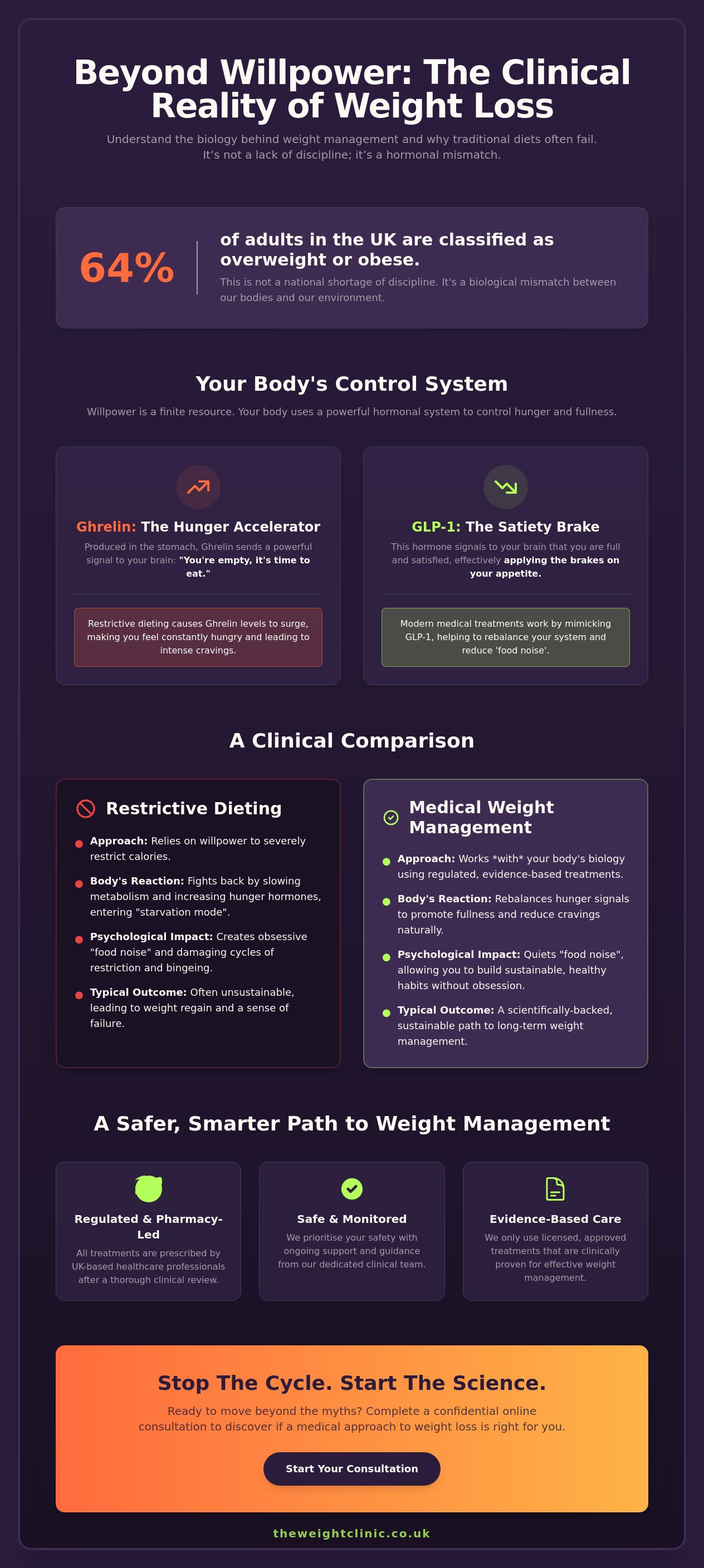
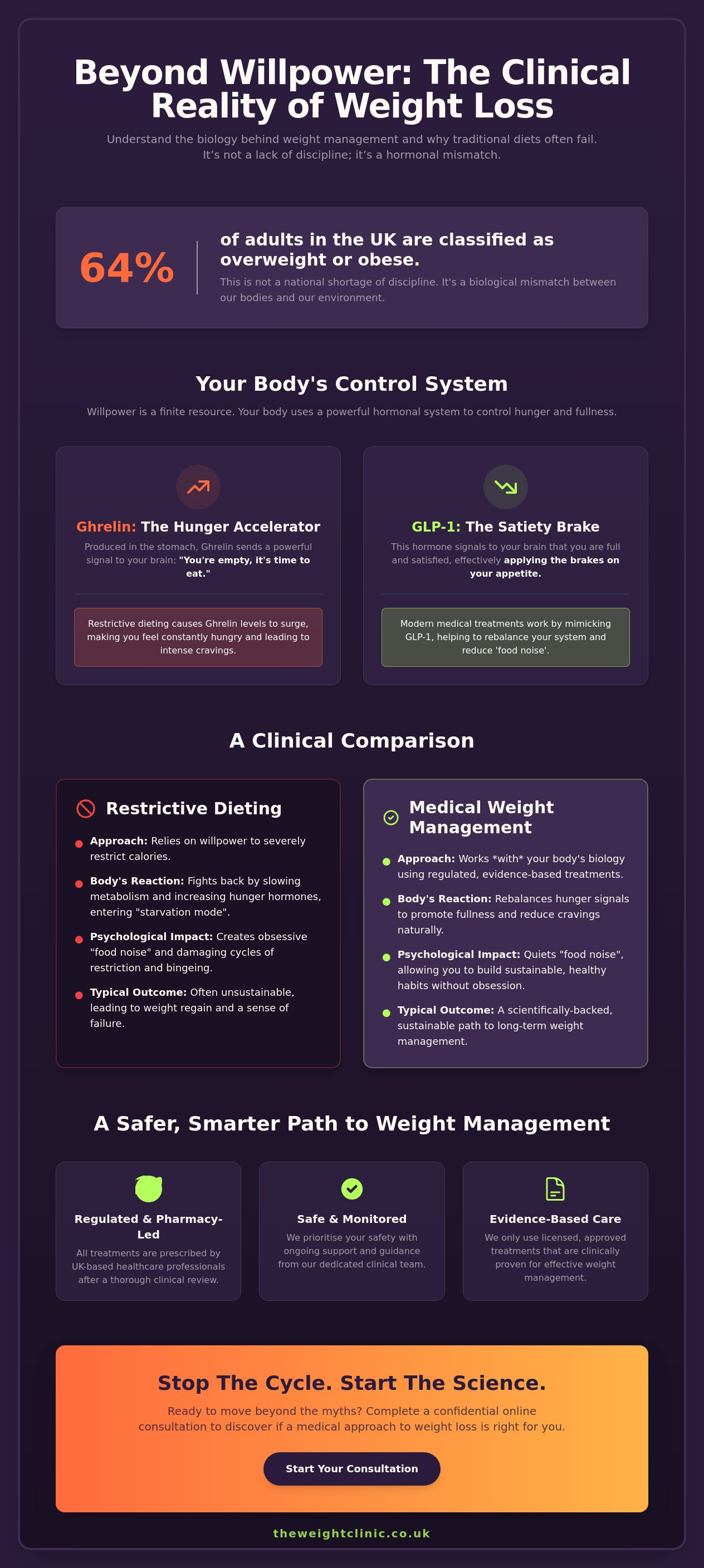
Obesity is not a character flaw. It is a complex medical condition. For decades, the "Willpower Myth" has convinced us that weight management is a simple matter of grit. The logic is basic: if you can't lose weight, you aren't trying hard enough. This is a lie. It ignores the clinical reality of how the human body functions. In the UK, approximately 28% of adults are now obese, and 64% are classified as overweight or obese. This isn't a national shortage of discipline. It's a biological mismatch between our bodies and our environment.
The standard advice to "eat less and move more" is a gross oversimplification. It treats your body like a calculator, but biology doesn't work that way. When you slash calories, your body doesn't just burn fat; it fights back. It slows your metabolism and ramps up hunger signals to protect its energy stores. For a comprehensive overview of weight management, you have to look beyond the treadmill and the salad bowl. You have to look at the hormones. This is why many are now seeking weight loss without dieting UK, opting for clinical interventions that address the root cause rather than just the symptoms.
The Problem with Restrictive Dieting
Restrictive dieting is often a recipe for failure. When you enter an extreme calorie deficit, you trigger "starvation mode." Your body thinks food is scarce, so it holds onto every gram of fat. This metabolic adaptation makes long-term success nearly impossible for the average person. There's also a heavy psychological toll. The "forbidden food" mindset creates an obsession with what you can't have, leading to cycles of restriction and bingeing. Most fad diets are simply unsustainable for a normal UK lifestyle. They don't account for work, family, or the basic human need for satisfaction.
Moving Beyond the "Shortcut" Stigma
Let's be blunt about medical help. It's not "cheating." It's not a "shortcut." We don't tell people with high blood pressure to just "try harder" to keep their heart rate down. We don't expect people with diabetes to simply wish their blood sugar into balance. We use medicine. Treating obesity with regulated treatments like Wegovy or Mounjaro is no different. It's a clinical decision to fix a biological problem. By moving past the stigma, we can focus on what actually works: evidence-based, regulated care that supports weight loss without dieting UK. It's time to stop the shame and start the science.
The Biology of Hunger: How Your Hormones Control the Scales
Your body is a survival machine. It doesn't care about your jeans size or aesthetic trends. It cares about energy security. This is the foundation of the "Set Point" theory. Your body has a preferred weight range that it considers safe. It defends this range with a complex system of hormonal checks and balances. If you try to force your weight down through sheer grit, your body perceives a crisis. It isn't a lack of discipline; it's a biological defence mechanism.
Two major players dictate your appetite: Ghrelin and GLP-1. Ghrelin is the "accelerator." It's produced in the stomach and tells your brain you're empty. GLP-1 is the "brake." It signals fullness and satisfaction. In a balanced system, these hormones work in harmony. For many people struggling with their weight, the signals are jammed. The accelerator is stuck to the floor, and the brakes are failing. This hormonal mismatch is why weight loss without dieting UK is now a major clinical focus. You can't out-think a chemical imbalance.
Dieting often amplifies "Food Noise." These are the intrusive, relentless thoughts about eating that dominate your day. It's not greed. It's your brain screaming for energy because it thinks you are starving. In the UK, our environment is "obesogenic." High-calorie, processed food is accessible and cheap. If your genetics lean towards efficient energy storage, your biology is effectively at war with your surroundings. Understanding this is the first step toward effective management. If you're ready to move past the noise, you can complete an online clinical review to explore biological support.
The Role of the Hypothalamus
The hypothalamus is your brain's command centre for energy balance. It regulates your metabolism, hunger, and activity levels without your conscious input. You don't "decide" to be hungry; your hypothalamus tells you that you are. When you lose weight through restriction, the brain sees a threat to survival. It triggers metabolic adaptation, making your body more efficient at using energy. It wants those kilos back. This is why most people find it harder to maintain weight loss than to lose it initially.
Leptin Resistance and Weight Gain
Leptin is the hormone that tells your brain you have enough fat stored. Logic suggests that more fat should mean more leptin and less hunger. Biology says otherwise. In many cases of obesity, the brain becomes deaf to these signals. This is leptin resistance. Your body is physically full, but your brain thinks it's starving. According to NHS guidance on obesity, this hormonal shift makes traditional weight management incredibly difficult. Carrying excess weight actually changes your hormonal profile, making "weight loss without dieting" a clinical necessity for long-term health.
Medical Weight Loss vs. Dieting: A Clinical Comparison
Willpower is a finite resource. Biology is a constant force. Traditional dieting asks you to fight your own nervous system with nothing but grit. It's a losing battle for most. Clinical intervention is different. It doesn't ask you to try harder; it changes the rules of the game. By addressing The biology of hunger, medical treatments provide a regulated, evidence-based path for weight loss without dieting UK. Stop treating your body like a misbehaving child. Treat it like a complex system that needs recalibration.
Modern treatments like Wegovy (Semaglutide) aren't "fat burners" or "metabolism boosters" in the marketing sense. They are hormone mimics. They replicate GLP-1, a hormone your gut naturally releases to tell your brain you're full. When this signal is amplified, the "food noise" that usually drives overeating simply goes quiet. You aren't forcing yourself to stop eating; you just don't feel the intrusive urge to continue. It's the difference between fighting a storm and simply closing the window.
The Mechanism of GLP-1 and Tirzepatide
These treatments work by slowing down gastric emptying. This means food stays in your stomach for longer, physically extending the feeling of fullness. Semaglutide mimics a single hormone. Mounjaro (Tirzepatide) takes a more advanced approach. It's a "dual-action" treatment that mimics both GLP-1 and GIP (glucose-dependent insulinotropic polypeptide). This two-pronged attack on hunger receptors makes it a potent option for those who've found that single-hormone approaches aren't enough. It's a more comprehensive way to manage the body's internal weight-regulation system.
Managing Expectations: What "Without Dieting" Actually Means
Don't mistake "without dieting" for "without eating." Your body still requires high-quality fuel to function. The difference lies in the *drive* to overeat. The clinical goal is quieting the mind, not counting every calorie. It's about freedom from the obsession with food. Whilst on treatment, focus on high-quality protein and consistent hydration. These aren't "diet rules" designed for punishment. They're biological requirements to maintain muscle mass and metabolic health whilst your body composition shifts. You're still in control, but the constant, hormonal pressure to consume is removed.
It's important to remember that these are prescription medicines. They aren't suitable for everyone and require a clinical review by a healthcare professional. If you're looking for a strategy that replaces the "willpower" struggle with biological support, you can start an online consultation to see if these treatments are appropriate for your circumstances.
Navigating Weight Loss Treatment in the UK
Accessing medical weight management in the UK is a clinical process, not a retail transaction. You don't just "buy" these treatments; you're prescribed them following a rigorous safety assessment. This distinction is vital. The UK has some of the strictest healthcare regulations in the world, governed by the Medicines and Healthcare products Regulatory Agency (MHRA) and the General Pharmaceutical Council (GPhC). These bodies ensure that any path toward weight loss without dieting UK is rooted in patient safety rather than lifestyle marketing trends.
Before starting any biological intervention, a clinical consultation is mandatory. This isn't a hurdle; it's a safeguard. A qualified professional must review your medical history, current medications, and overall suitability. For example, the MHRA recently updated safety information for GLP-1 receptor agonists to highlight risks such as acute pancreatitis. A regulated clinic will screen for these risks. If a provider offers these medicines without a thorough clinical review, they are operating illegally and putting your health at risk.
BMI and Eligibility Requirements
Eligibility for weight loss medication is defined by NICE (National Institute for Health and Care Excellence) guidelines. These aren't arbitrary numbers; they are based on clinical evidence of where the benefits of treatment outweigh the risks. Generally, you must have a BMI of 30 or higher to qualify. If you have weight-related comorbidities, such as hypertension or type 2 diabetes, the threshold is typically a BMI of 27 or higher. These criteria ensure that medical intervention is targeted at those who need it most. You can start a consultation to check your specific eligibility through our regulated platform.
NHS vs. Private Online Clinics
The blunt truth is that NHS access to modern weight loss treatments is currently very limited. Whilst Mounjaro and Wegovy are approved for use, NHS England is using a cohorting approach between 2025 and 2028 to manage funding and demand. This often results in Tier 3 weight management wait times that stretch into years. For many, this delay is unacceptable for their long-term health.
Private online clinics like The Weight Clinic offer an alternative route. The benefits are clear: speed, discreet home delivery, and consistent professional support. However, you must verify your provider. A legitimate UK-registered pharmacy will always display its GPhC registration number and provide clear information about its clinical team. We prioritise medical integrity over "app-culture" gimmicks. If you're ready to explore a regulated, safe approach to weight management, you should complete an online assessment today.
The Weight Clinic Approach: Regulated, Safe, and Blunt
The Weight Clinic isn't a lifestyle brand. We don't do "wellness." We do clinical pharmacy. Our approach to weight loss without dieting UK is built on biological reality. We provide regulated, evidence-based treatments like Mounjaro and Wegovy. These aren't lifestyle choices. They're medical interventions. We've stripped away the vague promises of the diet industry and replaced them with a "straight-talk" medical service.
Our process is methodical and prioritises your safety. It starts with a comprehensive online assessment. This isn't a tick-box exercise. A qualified UK clinician reviews every response to ensure suitability. If the treatment is appropriate, we prescribe it. If it isn't, we don't. Once approved, your treatment is dispensed by our pharmacy and delivered discreetly to your door. No apps. No subscriptions. No corporate barriers. Just direct access to regulated care.
Why We Don’t Sell "Miracle Cures"
We value medical integrity over marketing claims. You won't find words like "miracle" or "fat-melting" here. We offer clinical evidence, not empty promises. This is medical reality, not wellness fluff. Every prescription is overseen by UK-registered clinicians who understand the complexities of obesity. We prioritise safety and transparency in every interaction. This means being blunt about potential side effects and honest about what the medication can and cannot do. We follow GPhC standards because your health isn't a commodity.
Your Next Steps to Sustainable Health
It's time to change your perspective. Stop thinking about "dieting" and start thinking about "treatment." If your biology is working against you, willpower alone is an unreliable tool. Medical intervention can level the playing field. We've designed a streamlined, friction-free experience because we know the traditional route is often blocked by long wait times and administrative hurdles. You don't need another obstacle. You need a solution that works with your life.
Sustainable weight management is possible when you address the underlying hormonal issues. If you're ready for a no-nonsense approach to weight loss without dieting UK, take the first step. You can complete your online assessment now to see if you qualify for treatment. For a deeper dive into the science behind these medications, read our guide on Mounjaro UK: The Blunt Clinical Reality.
Recalibrate Your Biology for Sustainable Success
You've spent years fighting a battle your brain was programmed to win. Traditional dieting fails because it ignores the chemical reality of hunger and metabolic adaptation. By shifting your focus to weight loss without dieting UK, you move away from the cycle of shame and toward a clinical solution. It isn't about trying harder; it's about addressing the hormonal signals that keep the scales stuck. Biology isn't a choice, but how you treat it is.
We offer a different path. The Weight Clinic is a UK-registered pharmacy (GPhC) providing clinically-proven GLP-1 treatments that target the root cause of overeating. We don't do gimmicks or lifestyle fluff. We provide medical expertise and discreet, temperature-controlled UK delivery directly to your door. If you're ready to stop the food noise and follow a regulated treatment plan, we're here to help.
Take control of your health with a strategy backed by science. Begin your clinical weight loss consultation today and discover a more sustainable way to manage your weight. You deserve a plan that works with your body, not against it.
Frequently Asked Questions
Can I really lose weight without a restrictive diet?
Yes, but it requires addressing the biological drivers of hunger rather than just relying on willpower. Medical interventions like GLP-1 agonists reduce the intrusive "food noise" that leads to overeating. This allows for weight loss without dieting UK by helping you reach satiety faster and stay full for longer. It isn't about unlimited consumption; it's about your body finally responding to fullness signals that were previously jammed.
Are weight loss injections like Mounjaro and Wegovy safe?
These medications are MHRA-approved and have undergone rigorous clinical testing. They are safe for suitable patients when used under the supervision of qualified healthcare professionals. However, they are prescription medicines and carry potential risks, such as a small risk of acute pancreatitis. Safety is ensured through a thorough clinical review of your medical history to identify any contraindications before treatment begins.
How long does it take to see results from medical weight loss?
Most patients begin to feel a reduction in appetite within the first few days of their first dose. However, physical weight loss is a gradual process that happens over weeks and months. Clinical data suggests that significant results are achieved through consistent use and gradual dose titration. We don't promise "quick fixes" because sustainable weight management relies on steady, biological adjustment rather than rapid, unhealthy drops.
Do I need a prescription from my GP to start treatment?
You don't need a prior prescription or a referral from your GP to use our service. The Weight Clinic provides a comprehensive online consultation that serves as a clinical review. If our UK-registered clinicians deem the treatment suitable for you, they will issue a private prescription directly. We do, however, encourage you to keep your GP informed about your treatment to ensure your medical records remain accurate.
What happens if I stop taking weight loss medication?
If you stop the medication, the hormonal signals that manage your hunger will eventually return to their previous levels. Without the biological "brake" provided by the treatment, many people find their appetite increases, which can lead to weight regain. This is why we view these treatments as a tool to help you establish long-term habits whilst your biological drive to overeat is suppressed.
Is medical weight loss covered by the NHS?
NHS access is currently extremely limited and governed by strict cohorting criteria. Typically, you need a BMI of 40 or higher, or 35 with specific comorbidities, and must be referred to specialist Tier 3 or 4 weight management services. With current NHS wait times often stretching into years, many patients opt for private, pharmacy-led care to begin their weight loss without dieting UK more promptly.
What are the most common side effects of GLP-1 medications?
The most frequently reported side effects are gastrointestinal in nature. These include nausea, diarrhoea, vomiting, and constipation. These symptoms are usually most prominent when you first start the medication or when your dose is increased. Most side effects are mild and tend to settle as your body adjusts to the treatment. Our clinical team provides guidance on managing these effects throughout your journey.
How does The Weight Clinic ensure my treatment is regulated?
We are a UK-based, pharmacy-led clinic registered with the General Pharmaceutical Council (GPhC). This means we adhere to strict standards regarding clinical safety, medicine sourcing, and patient care. Every assessment is reviewed by a qualified UK clinician, and we only dispense MHRA-approved medications. We prioritise professional accountability over the "app-culture" approach, ensuring you receive genuine medical care from a legitimate healthcare provider.
Disclaimer
The information in this article is for general educational purposes only and should not be taken as personal medical advice. Weight-loss treatments, including prescription medicines, may not be suitable for everyone and require a clinical assessment by an appropriately qualified healthcare professional. Do not start, stop or change any medication without speaking to a prescriber or healthcare professional. If you have urgent symptoms or feel unwell, seek medical advice promptly or contact NHS 111 / emergency services where appropriate.