Stop treating clinical medicine like a lifestyle trend. If you're searching for prescription weight loss UK options, you've likely hit a wall with the NHS or felt overwhelmed by the "miracle" claims on social media. It's exhausting. You're tired of the wait lists and the noise. You want a solution that works, but you don't want to risk your health with a "cowboy" seller or a shady website.
We agree that the current landscape is a mess of jargon and marketing fluff. You deserve the facts, not a sales pitch. This guide strips away the nonsense to give you a blunt, medically-accurate breakdown of the UK’s regulated landscape. We’ll compare treatments like Mounjaro and Wegovy based on clinical reality, not aspirational ads.
By the end of this article, you'll have a clear understanding of UK eligibility and the confidence to choose a regulated clinic. We’ll look at how these medications actually work; we'll also tackle the side effects and set realistic expectations for your results. No gimmicks. Just medicine.
Key Takeaways
- Stop looking for shortcuts. Focus on MHRA-approved treatments that require professional medical supervision rather than tabloid hype.
- Compare the dual-action mechanism of Mounjaro against the established profile of Wegovy to find your best path for prescription weight loss UK.
- Understand the hard numbers. Learn the specific BMI requirements and health criteria needed to qualify for regulated clinical treatment.
- Get the facts on the process; this covers everything from the initial clinical review to secure cold-chain delivery to your door.
- Manage your expectations. Prepare for the reality of potential side effects and the clinical necessity of gradual dose titration.
Table of Contents
- Prescription Weight Loss in the UK: Clinical Reality vs. Tabloid Hype
- The GLP-1 Landscape: Comparing Mounjaro, Wegovy, and Foundayo
- UK Eligibility Criteria: Who Actually Qualifies for Treatment?
- The Prescription Journey: From Consultation to Cold-Chain Delivery
- Managing Clinical Expectations: Side Effects and Success
Prescription Weight Loss in the UK: Clinical Reality vs. Tabloid Hype
Prescription weight loss in the UK isn't a vanity project. It's a clinical response to a biological problem. For many, obesity isn't a failure of willpower; it's a failure of hunger signalling. Your brain tells you you're starving even when you've just eaten. Modern anti-obesity medications, specifically GLP-1 agonists, work by rebalancing these internal signals. This is science, not a shortcut.
The tabloids love the term "miracle jab." We don't. A miracle implies magic; these injections are the result of rigorous clinical trials and precise biochemistry. They are medical tools that require a reduced-calorie diet and increased activity to work. If you're looking for an effortless fix, you're in the wrong place. If you're looking for a regulated medical intervention to support your health, let's talk about the reality of prescription weight loss UK services.
The UK Regulatory Framework: GPhC and MHRA
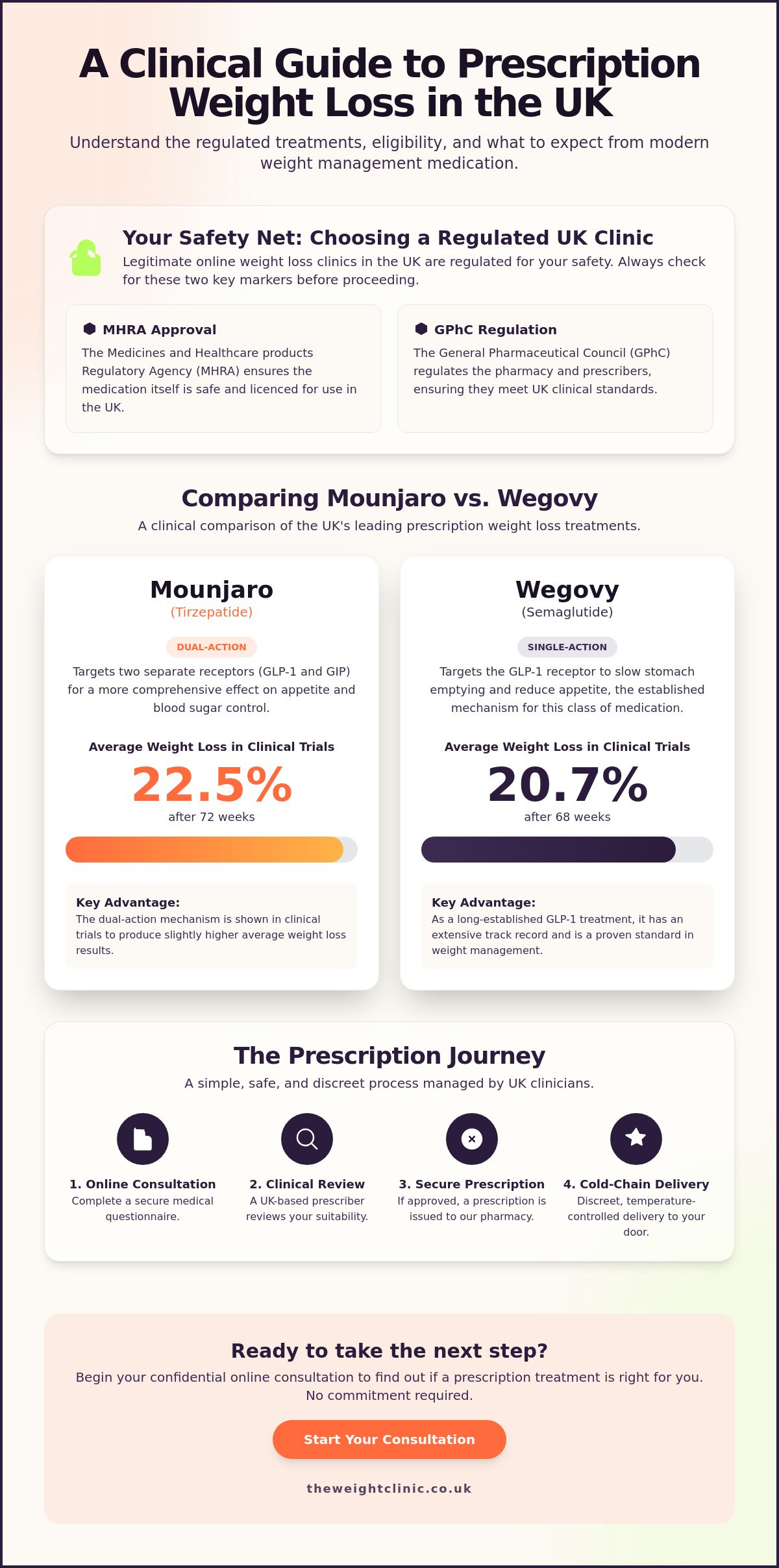
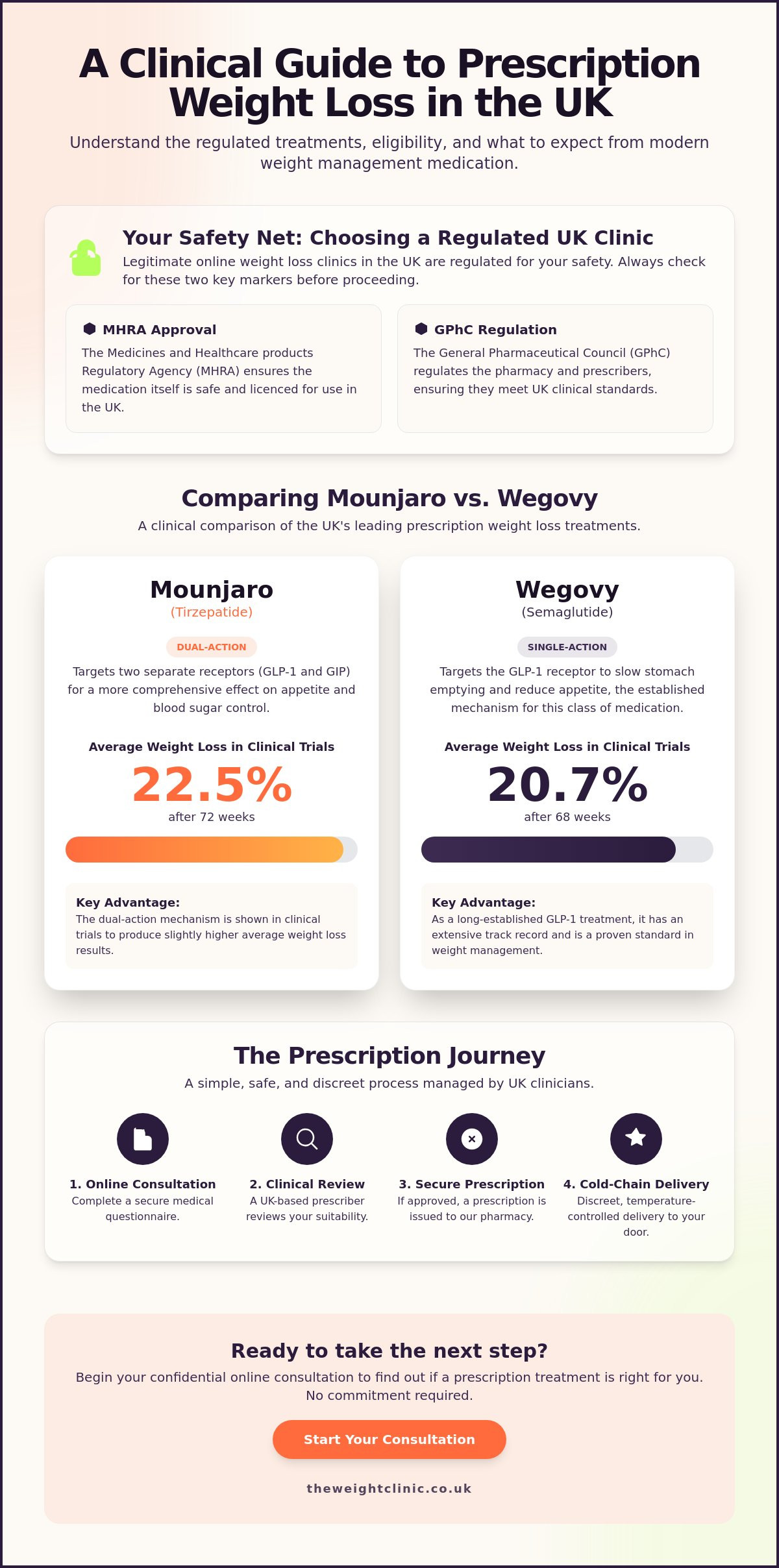
Regulation is your safety net. In the UK, two bodies matter: the MHRA and the GPhC. The MHRA (Medicines and Healthcare products Regulatory Agency) ensures that the drugs themselves are safe and effective. The GPhC (General Pharmaceutical Council) regulates the pharmacies that dispense them. This isn't optional; it's the law. To verify a legitimate service, look for these markers:
- The GPhC Green Cross: A clickable logo that links to the official pharmacy register.
- Clinical Review: A process where a qualified UK prescriber personally approves your treatment.
- MHRA Approval: Confirmation that the medication is licensed for weight management in the UK.
Check the website you're using. If you can't find a registration number, leave the site. Safety isn't just about the medicine; it's about the clinical oversight behind it. No consultation means no prescription. No exceptions.
NHS vs. Private Online Clinics: Choosing Your Path
Accessing treatment through the NHS is often a marathon. You usually need a referral to a Tier 3 specialist weight management service. The criteria are strict: typically a BMI of 35 or more with a weight-related comorbidity. Waiting times can stretch into months or even years. For many, this is a barrier to health, not a path to it.
Private online clinics like The Weight Clinic offer an alternative. You get immediate clinical review and discreet service without the postcode lottery. However, "private" shouldn't mean "unregulated." Avoid non-UK sellers offering "cheap" alternatives. These are often counterfeit, improperly stored, and dangerous. You can learn more about navigating this in our guide on weight loss treatment without a GP. Quality care costs more than "cowboy" sellers, but your health is worth the investment. This is clinical reality, not a tabloid headline.
The GLP-1 Landscape: Comparing Mounjaro, Wegovy, and Foundayo
Choosing the right path for prescription weight loss UK wide depends on your biological response and lifestyle needs. You aren't just picking a brand name; you're selecting a specific molecule. Whilst all these treatments target hunger, they do so through different chemical pathways. Some use a single-action approach, others target multiple receptors, and new oral options are finally removing the need for needles entirely.
The efficacy data is clear. In clinical trials, patients using Wegovy lost up to 20.7% of their body weight over 12 months. Mounjaro users saw even higher results, reaching up to 22.5%. These numbers represent the upper limit of clinical expectations when combined with lifestyle changes. They aren't guarantees, but they demonstrate why these medications have replaced older, less effective treatments.
Mounjaro (Tirzepatide): The Dual-Action Mechanism
Mounjaro is currently the only dual-action treatment on the market. It targets two hormones: GLP-1 and GIP. By activating both, it provides a more comprehensive "fullness" signal to the brain whilst also improving how your body breaks down sugar and fat. This dual-action mechanism is why many clinicians view it as having a slight edge in total weight loss results. You can read more about the Mounjaro UK clinical reality to see if this dual-pathway approach fits your health profile. It is a powerful tool, but it requires a commitment to a structured Mounjaro treatment plan.
Wegovy (Semaglutide): The Proven Standard
Wegovy remains the global benchmark for GLP-1 receptor agonists. It mimics a single hormone to slow gastric emptying and reduce appetite. For many patients, a Wegovy treatment is the logical starting point due to its extensive long-term safety data. Safety is built into the process via the induction phase. You must start at a 0.25mg dose. This isn't a suggestion; it's a non-negotiable clinical requirement to allow your digestive system to adapt. If you're ready to see if you qualify, you can start an online consultation today for a professional review.
Foundayo and the Future of Oral Treatments
Needles aren't for everyone. The recent MHRA approval of semaglutide tablets in June 2026 has opened the door for more convenient delivery methods. Foundayo (Orforglipron) represents the next step in this evolution. Unlike injectable peptides, Foundayo is a non-peptide molecule designed specifically for oral consumption. Whilst it is not yet available in the UK as of mid-2026, it is the most anticipated Foundayo treatment for those who want clinical results without the weekly injection. It’s a shift toward making chronic weight management as simple as taking a daily vitamin.
UK Eligibility Criteria: Who Actually Qualifies for Treatment?
Eligibility for clinical weight management isn't a suggestion. It's a safety boundary. If you're exploring prescription weight loss UK wide, you need to understand that these medications are reserved for those whose health is genuinely at risk. We don't prescribe based on "bikini body" goals or a desire to lose a few pounds for a wedding. This is medicine. It’s for patients who need it to prevent or manage serious chronic disease.
The standard entry point is a Body Mass Index (BMI) of 30 or higher. However, the 27+ BMI exception applies if you also suffer from weight-related comorbidities. These include hypertension, type 2 diabetes, or obstructive sleep apnoea. In these cases, the clinical benefit of weight loss outweighs the potential risks of the medication, even at a lower starting weight. Whilst NHS criteria for Mounjaro are currently very strict, they are expected to broaden from June 2026, making the medication more accessible to a wider range of patients through specialist services.
Ethnicity also plays a critical role in our clinical review. NICE guidelines acknowledge that patients from South Asian, Chinese, Black African, or Afro-Caribbean backgrounds face higher health risks at lower BMIs. Consequently, the thresholds for these groups are often adjusted downwards by 2.5 points. A BMI of 27.5 might be the qualifying mark where 30 would be the standard for others. It’s about biological reality, not arbitrary numbers.
BMI and Comorbidities: The Clinical Threshold
Meeting a number on a scale is only half the story. A full medical assessment is mandatory because we need to see the whole picture. When we talk about "weight-related health conditions," we are looking for evidence that your weight is actively harming your cardiovascular or metabolic health. This includes things like high cholesterol or non-alcoholic fatty liver disease. You can find a deeper dive into these specifics in our guide on Mounjaro Eligibility UK: Who Qualifies for Tirzepatide in 2026?. We don't just tick boxes; we assess risk.
When Prescription Weight Loss is Not Suitable
Some patients are hard "no" cases for safety reasons. If you have a personal or family history of medullary thyroid carcinoma or Multiple Endocrine Neoplasia syndrome type 2, these drugs are off the table. The same applies to anyone with a history of severe pancreatitis or those who are currently pregnant or breastfeeding. We also cannot prescribe to patients with Type 1 diabetes or those under the age of 18.
Regulated clinics will always reject "cosmetic" applications. If your BMI is within the healthy range, seeking prescription weight loss UK options is both dangerous and clinically inappropriate. It puts unnecessary strain on your system without the health-saving benefits that justify the treatment. At The Weight Clinic, your safety will always take precedence over making a sale.
The Prescription Journey: From Consultation to Cold-Chain Delivery
Getting prescription weight loss UK services isn't a simple "add to cart" experience. If it is, you're on the wrong site. A legitimate clinical journey starts with data, moves to human review, and ends with precision logistics. It's a structured path designed to keep you safe whilst ensuring the medication you receive actually works. This isn't about speed; it's about clinical integrity.
Every patient starts at the beginning. This means the lowest possible dose. For Wegovy, that's 0.25mg. For Mounjaro, it's 2.5mg. This induction phase is non-negotiable. It allows your metabolic system to adapt to the GLP-1 hormone without overwhelming your digestive tract. Skipping steps or rushing the process leads to side effects, not faster results. We prioritise your long-term success over a quick, unsustainable drop.
Navigating the Online Medical Assessment
The assessment is your digital consultation. We need the truth. You'll provide your height, weight, medical history, and any current medications. We also require photo ID and weight verification. This isn't bureaucracy; it's clinical accountability. It prevents misuse and ensures you are biologically eligible for treatment. If you're ready to provide your details, you can start your online consultation now. A UK-registered prescriber will then personally review your file. No bots. No automated approvals. Just professional oversight.
Why Cold-Chain Delivery is Non-Negotiable
Biology is fragile. GLP-1 medications like Mounjaro and Wegovy are proteins. If they get too warm, they break down. A warm pen is a useless pen. This is why cold-chain logistics are a critical part of the prescription weight loss UK landscape. If your provider doesn't mention temperature control, they aren't providing medical care; they're just shipping boxes.
Your medication must arrive in temperature-controlled packaging. Look for discreet, insulated boxes with medical-grade cool packs. If a provider sends your treatment in a standard padded envelope, they are compromising your health and your money. We treat these injections as the high-precision clinical tools they are. You can read more about the physical reality of these treatments in our guide on medical weight loss UK myths. Safety doesn't stop once the prescription is written; it continues until the pen is in your fridge.
Managing Clinical Expectations: Side Effects and Success
Success in prescription weight loss UK wide isn't measured by how fast you lose weight. It's measured by how well you manage the process. Clinical weight loss is a marathon, not a sprint. If you expect a perfectly linear drop in numbers every week, you'll be disappointed. Biology doesn't work that way. Your body will resist change. It will plateau. It will adapt. Understanding this reality is the difference between long-term success and giving up after a month.
The titration schedule is your roadmap. You'll typically increase your dose every four weeks. This isn't an arbitrary timeline. It’s a clinical necessity to allow your GLP-1 receptors to adjust. Rushing to a higher dose doesn't guarantee faster weight loss; it usually just guarantees more severe side effects. We move slowly to keep you on the treatment. Staying on the medication is what drives results, not the speed of the increase.
Weight plateaus are inevitable. After an initial drop, your body may stall for several weeks as it recalibrates its metabolic rate. This isn't a sign that the medication has stopped working. It's a sign that your body is finding a new baseline. During these periods, focus on non-scale victories like improved energy, better sleep, or changes in how your clothes fit. Persistence during a plateau is where the real work happens.
Managing Common Side Effects
Nausea, indigestion, and fatigue are common amongst patients starting GLP-1 treatments. Most of these symptoms are mild and temporary. You can manage them with practical adjustments. Drink plenty of water. Eat smaller, more frequent meals. Avoid heavy, high-fat foods that stay in the stomach longer. If you're struggling, read our guide on the Weight Loss Jab UK: The Blunt Truth About GLP-1 Injections for more clinical insights.
Know when to seek help. Mild nausea is expected; persistent vomiting or severe abdominal pain is not. If you experience symptoms that prevent you from eating or drinking, contact your clinician immediately. We are here to support your journey, not just provide the prescription. Safety requires open communication.
The Role of Lifestyle whilst on Medication
Medication is not a substitute for effort. When you lose weight rapidly, your body can lose muscle alongside fat. This is why high protein intake and resistance training are non-negotiable. You want to lose fat whilst preserving the muscle that drives your metabolism. If you ignore your diet and movement, you risk becoming "thin but unhealthy," which isn't the goal of clinical treatment.
Sustainable habits are your exit strategy. Use the period of reduced hunger to relearn what a normal portion looks like. Organise your life around movement. Medication manages the biology; lifestyle manages the long-term result. If you don't change the underlying behaviours, the weight will return when the treatment ends. Start building your post-medication future today.
Take Control of Your Clinical Weight Loss Journey
Success isn't about finding a magic injection. It's about matching modern science with your individual biology. You now know the difference between dual-action molecules like Mounjaro and established standards like Wegovy. You understand that prescription weight loss UK services must be regulated, transparent, and built on professional clinical review. Safety isn't an optional extra; it's the foundation of the entire process, from your first assessment to the temperature-controlled delivery of your medication.
The Weight Clinic provides a path forward that prioritises your health over marketing trends. As a UK-Registered Pharmacy, we offer clinically-proven GLP-1 treatments backed by discreet cold-chain delivery to ensure every dose remains effective. We don't offer quick fixes, but we do offer the medical tools and professional oversight you need to make lasting changes. If you meet the eligibility criteria and are ready to commit to a structured, evidence-based plan, the next step is simple.
Complete your online consultation with The Weight Clinic today. Our prescribers are ready to review your history and help you determine the most appropriate clinical route for your health. You've got the facts; now it's time to act.
Frequently Asked Questions
Do I need a GP referral to get prescription weight loss in the UK?
No, you don't need a GP referral to access treatment privately. Regulated online clinics operate independently, providing their own clinical review and prescribing services. Whilst we recommend informing your GP about any new medication, it isn't a legal requirement for your order to be approved. You simply complete an online medical assessment which is then reviewed by a qualified UK clinician to ensure suitability.
How much does Mounjaro or Wegovy cost privately in the UK?
Private costs for these medications vary depending on the specific molecule and the dosage required for your stage of treatment. Typically, the price increases as you move through the titration schedule to higher maintenance doses. These costs cover the medication itself, the clinical review by a prescriber, and the specialised cold-chain delivery required for biological treatments. You should check the current pricing on our specific treatment pages for the most accurate information.
What happens if I miss a dose of my weight loss injection?
If you miss a dose, the action you take depends on how many days have passed since your scheduled injection. For Wegovy, you can take the missed dose if it's within five days; for Mounjaro, the window is usually within four days. If more time has passed, skip the dose entirely and wait for your next scheduled day. Don't take two doses at once to make up for a missed one.
Can I switch from Wegovy to Mounjaro if I am not seeing results?
Switching between medications is possible but requires a fresh clinical review and assessment of your progress. You cannot simply swap one pen for another at the same dose level. Because Mounjaro and Wegovy use different active molecules, you usually need a "washout" period or must start back at the induction dose of the new treatment. This ensures your body adapts safely to the different hormone signals without excessive gastrointestinal distress.
Is prescription weight loss medication available on the NHS for everyone?
No, NHS access to prescription weight loss UK treatments is currently restricted to specific high-risk groups. Most patients must be referred to a Tier 3 specialist weight management service to qualify. Eligibility usually requires a BMI of 35 or more alongside a weight-related health condition. Whilst some criteria are broadening in 2026, the long waiting lists mean many people choose to seek private treatment instead.
How long do I need to stay on weight loss injections?
Treatment duration varies based on your individual weight loss goals and clinical response. Most clinical trials for these medications lasted between 68 and 72 weeks to achieve maximum results. Obesity is a chronic condition; therefore, many patients stay on a maintenance dose for a year or more. You should discuss your specific timeline with your prescriber during your regular reviews to ensure your progress remains safe and effective.
Are these medications safe to use long-term for obesity management?
Yes, medications like semaglutide and tirzepatide are licensed for chronic weight management rather than short-term use. They have been used for years in the treatment of Type 2 diabetes before being approved specifically for obesity. Long-term use is generally considered safe for those who tolerate the medication well. Your clinician will monitor your health markers periodically to ensure the treatment continues to provide a benefit that outweighs any potential risks.
Will I put all the weight back on if I stop the medication?
Weight regain is common if you stop the medication without having established permanent lifestyle habits. These drugs manage the biological signals of hunger; when you stop, those signals eventually return. To maintain your results, you must use the time on the medication to organise your diet and exercise routine. Success depends on using prescription weight loss UK options as a tool to bridge the gap toward sustainable long-term behaviour.
Disclaimer
The information in this article is for general educational purposes only and should not be taken as personal medical advice. Weight-loss treatments, including prescription medicines, may not be suitable for everyone and require a clinical assessment by an appropriately qualified healthcare professional. Do not start, stop or change any medication without speaking to a prescriber or healthcare professional. If you have urgent symptoms or feel unwell, seek medical advice promptly or contact NHS 111 / emergency services where appropriate.