Nausea isn't a glitch in the system; it's a physiological confirmation that the medication is working. You're likely here because you've heard the horror stories about Mounjaro side effects UK or you're staring at your first 2.5mg pen with a genuine sense of dread. It's normal to feel anxious when lifestyle marketing glosses over the physical reality of metabolic change.
We're stripping away the vague jargon to give you the blunt clinical reality for 2026. This isn't about scaring you off; it's about preparation. We'll provide a data-led breakdown of what to actually expect, from common gastrointestinal shifts to the rare risks highlighted by the MHRA in January 2026. You'll get a practical toolkit for managing nausea and a clear understanding of the titration schedule. We're moving past the "miracle cure" noise to focus on the evidence-based safety protocols that keep your health at the centre of the process.
Key Takeaways
- Understand the biological reality of how Tirzepatide alters your digestive speed to set realistic expectations from day one.
- Identify common Mounjaro side effects UK patients face, including why nausea is a frequent but manageable part of the initial titration phase.
- Navigate the step-up process from 2.5mg to 15mg with a clear clinical protocol for managing metabolic transitions.
- Recognise "red flag" symptoms like persistent abdominal pain to ensure you know exactly when to seek professional medical advice.
- Discover practical, evidence-based strategies to minimise gastrointestinal discomfort through smarter hydration and dietary choices.
Understanding Mounjaro Side Effects: The Biological Reality
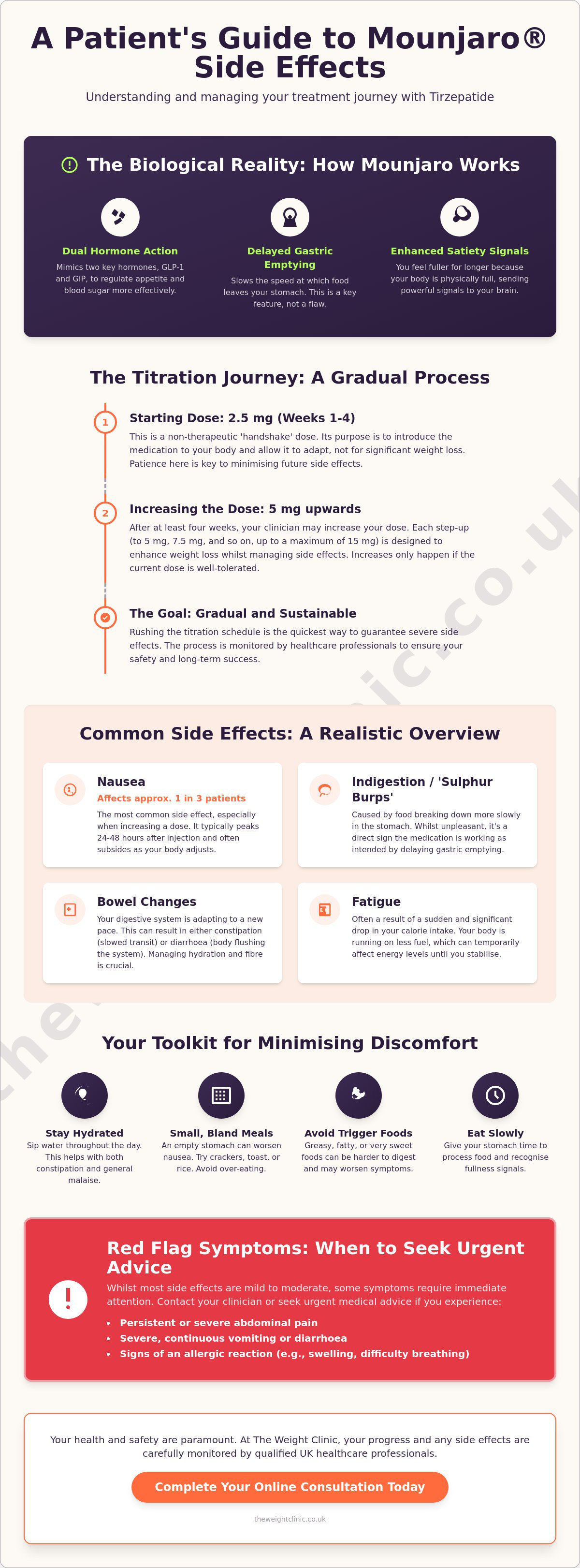
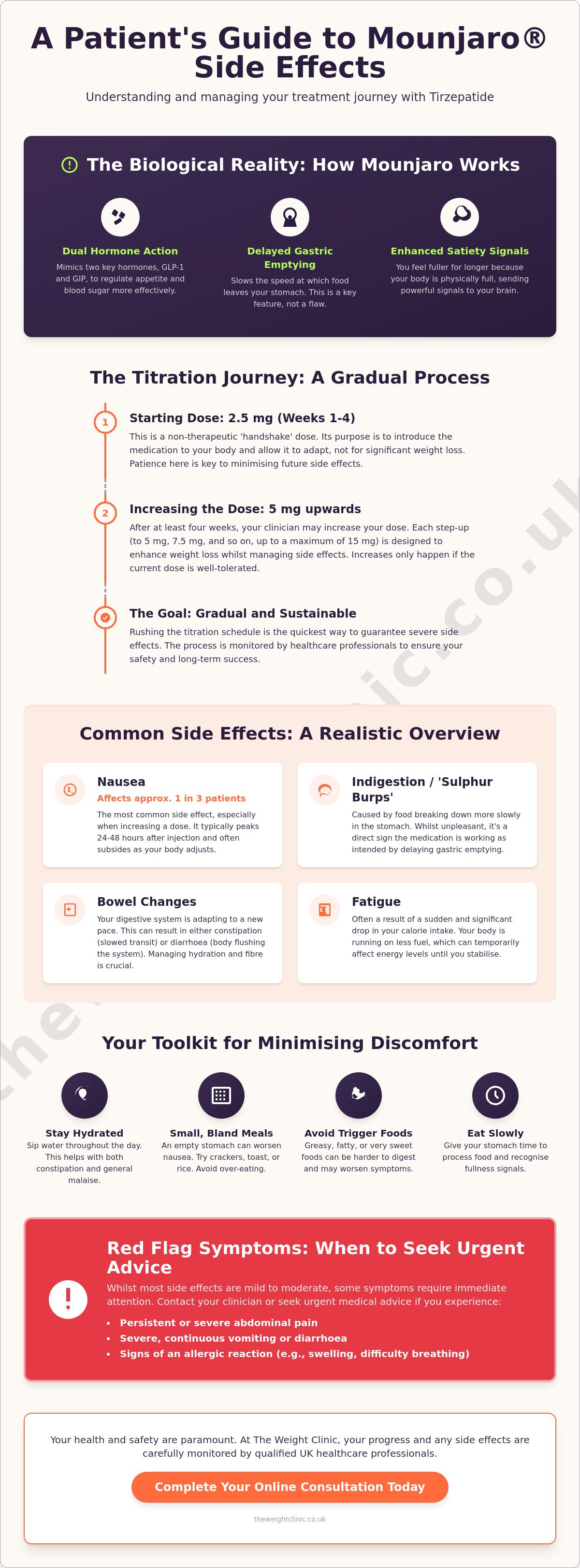
Mounjaro isn't a passive supplement. It's a dual agonist that forces your body to rewrite its metabolic rules. Specifically, it mimics two hormones: Glucagon-like peptide-1 (GLP-1) and Glucose-dependent insulinotropic polypeptide (GIP). This dual action is why clinical trials show such significant results, but it's also the direct cause of Mounjaro side effects UK patients experience. You're not just taking a pill; you're introducing a complex hormonal shift.
The medication works by fundamentally slowing down your digestive tract. This isn't an accidental flaw; it's a clinical feature. By delaying gastric emptying, your stomach keeps food for longer. You feel full because, physically, you are. However, whilst food sits in the stomach for extended periods, it can lead to the nausea and discomfort often reported. Understanding Tirzepatide (Mounjaro) basics helps reframe these symptoms as signs of biological activity rather than a sign that something is wrong.
How Tirzepatide Affects Your Digestive System
Think of it as "gastroparesis-lite." You're deliberately inducing a slower movement of food through your gut. This triggers the brain-gut connection, sending signals to your hypothalamus that you've had enough to eat. Interestingly, Mounjaro's addition of the GIP receptor agonist may actually help mitigate some of the severe nausea seen with GLP-1 only medications. It's a more balanced approach to metabolic control, even if the initial transition feels rocky. Amongst the common symptoms, a slight sense of malaise is often just the brain adjusting to these new satiety signals.
The Induction Phase: Why the First 4 Weeks Matter
Your first month on the 2.5mg dose is a biological handshake. This dose is sub-therapeutic. It's not meant to melt away stones of weight; it's designed to introduce the hormone to your system without overwhelming your receptors. Many patients feel frustrated by a lack of immediate weight loss, but rushing this loading period is the quickest way to guarantee severe Mounjaro side effects UK.
Give your body the time to adapt. Most symptoms are transient. They settle as your digestive system learns to operate at this new, slower pace. If your side effects are manageable on 2.5mg, don't feel pressured to escalate to 5mg until your clinical team confirms you're ready. Patience at the start prevents a "crash and burn" scenario later in the titration schedule. Safe, regulated care through The Weight Clinic ensures this transition is monitored by professionals who prioritises your long-term health over quick fixes.
Common Side Effects: Navigating the Gastrointestinal Hurdles
Most marketing materials for weight loss treatments focus on the transformation. They rarely lead with the reality of "sulfur burps" or the specific timing of 3:00 AM nausea. We won't do that. If you are starting this journey, you need to know that gastrointestinal disruption is the rule, not the exception. According to the European Medicines Agency Mounjaro assessment, these issues are generally mild to moderate, but they are very real. These are the biological "taxes" you pay for a fundamentally altered metabolism.
Statistics suggest that nausea affects approximately 1 in 3 patients during the titration phase. This is most prevalent when you move between doses, such as stepping up from 2.5mg to 5mg. Alongside the sickness, you might encounter indigestion or "sulfur burps." This happens because food sits in your stomach longer and begins to break down differently. It's unpleasant, but it's a direct result of the delayed gastric emptying we discussed earlier. Fatigue is another common factor. It isn't always a direct drug reaction; often, it's simply your body reacting to a significant, sudden drop in caloric intake. You're running on less fuel, and your energy levels will reflect that until you stabilise.
Nausea and Vomiting: The Most Frequent Challenges
There's a difference between "background nausea"—that low-level feeling of being slightly seasick—and acute vomiting. For most, Mounjaro side effects UK patients report involve the former. Nausea typically peaks 24 to 48 hours after your weekly injection. This is when the medication reaches its highest concentration in your bloodstream. A common mistake is skipping meals entirely when you feel sick. This often backfires. An empty stomach can actually worsen GLP-1 induced nausea. Stick to small, bland portions like crackers or dry toast to keep your system moving without overtaxing it.
Managing Bowel Changes: Constipation vs Diarrhoea
Your gut is learning a new speed. For some, this results in constipation because the transit time has slowed too much. For others, the body reacts by flushing the system, leading to diarrhoea. Hydration is your non-negotiable tool here. If you're dehydrated, constipation is almost guaranteed. Whilst high-fibre diets are generally advised, be careful. Introducing massive amounts of fibre whilst your digestion is already sluggish can lead to painful bloating and gas. It's about balance, not extremes. If you're unsure how to manage these transitions, you can begin an online consultation to get professional guidance on your specific symptoms.
Dose Escalation and Side Effect Management
Stepping up your dose isn't a race to the finish line. It's a calculated clinical progression. Mounjaro doses range from 2.5mg up to 15mg, moving in 2.5mg increments every four weeks. Each increase represents a fresh challenge for your metabolic and digestive systems. It is the moment your body has to recalibrate its response to the dual hormone activation. Expect a "flare" of symptoms. It is entirely common for Mounjaro side effects UK patients report to re-emerge for 48 to 72 hours following a dose increase. This isn't a sign of failure. It's a sign of adaptation.
At The Weight Clinic, we take a pragmatic approach. We prioritise safety over the speed of escalation. If your body is struggling to adapt to a specific strength, we don't just push you onto the next pen. We look at the evidence. If the 5mg dose is working and your side effects are manageable, there is often no clinical reason to rush to 7.5mg. We focus on sustainable progress, not just hitting the maximum dose as quickly as possible. This is a medical treatment, not a lifestyle supplement.
The Titration Schedule: Why We Start Low
The standard schedule involves four-week intervals at each strength. This allows your receptors to desensitise slightly before the next increase. However, the smarter clinical choice is often to stay on a lower dose for longer if you are achieving results. This reduces the overall burden on your gut. For a comprehensive look at how this fits into the wider landscape of care, see our article on Mounjaro UK: The Blunt Clinical Reality. Starting low isn't about holding you back; it's about building a foundation that your digestive system can actually handle.
What to Do if Side Effects Become Intolerable
If you hit a wall, don't panic. We have a clear protocol for when side effects become intrusive. This might involve holding your current dose for an extra month or stepping back down to a previous strength. Never attempt to split doses or dismantle your KwikPen to alter the amount of medication. This is unsafe and compromises the integrity of the treatment. Instead, follow the NHS advice on managing Mounjaro side effects and contact our pharmacy team. If you're currently struggling with a dose increase, you can submit a clinical review to discuss your options with a qualified professional.
Serious Side Effects and When to Seek Urgent Clinical Advice
Whilst most patients only encounter transient gastrointestinal issues, we must address the clinical gravity of rare complications. Transparency is our priority. On 29 January 2026, the MHRA updated product information for all GLP-1 receptor agonists, including Mounjaro, to highlight the risk of severe acute pancreatitis. These are not "lifestyle" risks to be ignored. They are serious medical events that require immediate action. Understanding the distinction between a "normal" side effect and a clinical emergency is vital for your safety.
The UK uses the MHRA Yellow Card scheme to monitor the safety of medicines like Tirzepatide. This system allows patients and clinicians to report suspected side effects, ensuring that the clinical reality of the drug is constantly updated. It's a cornerstone of UK patient safety that many glossy brochures omit. If you experience an unexpected reaction, reporting it helps protect the wider patient community. However, your first priority in an emergency is always immediate medical intervention.
Identifying Rare but Serious Complications
Pancreatitis is the most discussed serious risk. The "red flag" symptom is severe, persistent abdominal pain that often radiates through to your back. This isn't the standard bloating or mild nausea we discussed earlier. If this pain occurs, stop using the medication and attend A&E immediately. Gallbladder disease, including gallstones, is another potential risk. Interestingly, this is often linked to the speed of weight loss itself rather than just the drug. Rapid fat loss changes the composition of bile, which can lead to stone formation.
For those managing Type 2 Diabetes alongside weight loss, hypoglycaemia (low blood sugar) is a significant concern. If you're taking Mounjaro with other glucose-lowering medications like insulin or sulphonylureas, your risk increases. You must monitor your levels closely and follow the specific guidance provided during your clinical review.
The Importance of Regulated UK Clinical Oversight
The rise of unregulated online sellers is a direct threat to patient safety. Buying Mounjaro from a source that doesn't require a thorough medical history or a verified clinical review is dangerous. At The Weight Clinic, we prioritise regulated, evidence-based care. We monitor your progress and screen for contraindications that could make Mounjaro side effects UK patients face more severe.
An honest medical history is your best defence against serious complications. If you have a history of pancreatitis or specific thyroid conditions, Mounjaro may not be suitable for you. We provide a balanced view of these risks because you deserve the full picture before starting treatment. To ensure your journey is managed by qualified professionals, you should complete an online consultation to determine your suitability for treatment.
Practical Strategies for Minimising Discomfort Whilst on Mounjaro
Managing Mounjaro side effects UK isn't about hope. It's about a protocol. Your dietary choices and hydration levels are the primary levers you can pull to control how you feel. If you treat your body like it's on a standard diet, you'll likely struggle. This medication requires a shift in how you consume fuel. High-fat, fried, or heavily spiced foods are the most common triggers for gastrointestinal distress. Avoid these entirely in the 24 hours surrounding your injection. Because your digestion is slower, heavy fats sit in the stomach longer, leading to the "heavy" nausea many patients dread.
Prioritise protein at every opportunity. Rapid weight loss can lead to muscle wastage if you aren't careful. Aim for lean sources like chicken, fish, or plant-based alternatives. Small, frequent meals are your new standard. The traditional "three squares a day" approach often leads to overfilling a stomach that isn't emptying at a normal rate. Eat until you're no longer hungry, not until you're full. If you push past that satiety signal, you'll pay for it with hours of discomfort.
Dietary Adjustments and Hydration Protocols
Hydration is the most overlooked factor in GLP-1 success. However, there's a technique to it. Follow the "Sip, Don’t Gulp" rule. Gulping large amounts of water can lead to air swallowing and increased bloating. Keep a bottle with you and take small sips throughout the day. For mild nausea, ginger and peppermint tea remain clinical favourites. They provide a gentle, non-medicinal way to settle the stomach without adding bulk. If you find your symptoms are persisting despite these changes, it's time for a professional review.
Lifestyle Habits to Support Your Treatment
Where and when you inject matters. Rotate your injection site every single week. Moving between the thigh, abdomen, and back of the arm can prevent localised irritation and, for some patients, seems to modulate the intensity of systemic side effects. Many find that injecting at night allows them to "sleep through" the initial peak of the medication. This can be a game-changer if you usually feel sluggish the morning after your dose.
Final straight-talk: Side effects are a hurdle, but they shouldn’t be a wall. Most symptoms are manageable with the right clinical support and lifestyle adjustments. You don't have to navigate this alone. If you're ready to take the next step with professional oversight, start your consultation today. Our pharmacy-led team is here to ensure your journey is safe, regulated, and focused on your long-term health.
Moving Forward with Clinical Confidence
Understanding the reality of metabolic change is the first step toward long-term success. Mounjaro side effects UK patients encounter are often the physical evidence of a system being recalibrated. They are manageable hurdles, not reasons to abandon your health goals. By prioritising protein, staying ahead of hydration, and following a disciplined titration schedule, you can mitigate the worst of the gastrointestinal transition.
Success isn't about avoiding every discomfort; it's about having the right clinical support when they occur. At The Weight Clinic, we provide no-nonsense clinical guidance backed by UK-registered pharmacy oversight. We don't offer quick fixes or lifestyle gimmicks. We offer regulated, evidence-based care and discreet national delivery to your door. If you are ready to stop guessing and start a professionally monitored journey, we are here to guide you through every dose.
Start your clinical consultation for Mounjaro today and take control of your metabolic future with expert support.
Frequently Asked Questions
How long do Mounjaro side effects usually last?
Most side effects are transient and settle within a few days of each injection or a few weeks of starting a new dose. Symptoms typically peak 24 to 48 hours after you use your pen. If your discomfort persists beyond the initial titration phase or becomes debilitating, you must consult your clinical team for a dose review.
Can I drink alcohol whilst taking Mounjaro?
You can drink alcohol, but it's often a poor decision for your digestive system. Alcohol is a gastric irritant that can significantly worsen nausea and increase the risk of low blood sugar. Many patients find their tolerance drops or they simply lose the desire for alcohol whilst on treatment.
What are "sulfur burps" and how do I stop them?
Sulfur burps occur because food sits in your stomach for longer due to delayed gastric emptying. This allows gas to build up as food breaks down slowly. To stop them, reduce your portion sizes and avoid high fat or heavy meals, especially in the 48 hours following your weekly injection.
Does Mounjaro cause hair loss?
Mounjaro doesn't directly cause hair loss, but rapid weight loss can trigger temporary thinning known as telogen effluvium. This is a physical reaction to the stress of significant calorie reduction. Prioritising your daily protein targets and staying hydrated is the best way to support hair health during your treatment journey.
Will I get "Mounjaro face" if I lose weight too quickly?
"Mounjaro face" is simply the result of losing subcutaneous fat in the facial area. It isn't a specific side effect of the drug itself. Any significant weight loss can lead to a more hollowed appearance. A slower, more controlled titration can sometimes give your skin more time to adjust to your new volume.
What should I do if I miss a dose of Mounjaro?
Take your missed dose as soon as you remember if it's within 4 days of the scheduled time. If more than 4 days have passed, skip that dose entirely and take your next one on your usual day. Never take two doses at once to make up for a missed one as this increases the risk of severe sickness.
Can Mounjaro cause depression or mood changes?
Mood changes are rare but must be taken seriously if they occur. Whilst clinical trials haven't established a definitive link between Tirzepatide and depression, any significant hormonal shift can impact your well-being. Contact your prescriber immediately if you notice a persistent low mood or increased anxiety during your treatment.
Is it normal to feel extremely tired on Mounjaro?
Fatigue is a very common part of Mounjaro side effects UK patients experience, often caused by a sudden drop in caloric intake. Your body is adjusting to running on less fuel whilst your metabolism shifts. Prioritising sleep and ensuring you aren't severely undereating will help you manage these energy slumps.
Disclaimer
The information in this article is for general educational purposes only and should not be taken as personal medical advice. Weight-loss treatments, including prescription medicines, may not be suitable for everyone and require a clinical assessment by an appropriately qualified healthcare professional. Do not start, stop or change any medication without speaking to a prescriber or healthcare professional. If you have urgent symptoms or feel unwell, seek medical advice promptly or contact NHS 111 / emergency services where appropriate.