GLP-1 medications are not "slimming jabs" or lifestyle shortcuts; they are complex metabolic tools that require a clinical prescription, not a social media subscription. If you feel frustrated by generic diet advice or confused by the constant noise surrounding Wegovy and Mounjaro, you aren't alone. Many people are currently caught between sensationalist headlines and the genuine fear of unregulated, "black market" sellers offering dangerous, fake products. Finding the truth about GLP-1 weight loss UK shouldn't feel like a gamble with your health.
We agree that you deserve clinical facts rather than polished marketing claims. This guide provides a blunt, evidence-based look at how these treatments actually function within your body. You'll learn the practical differences between Tirzepatide and Semaglutide, including the recent June 2026 MHRA approval of oral options. We also outline the strict UK eligibility criteria and explain how to access treatment safely through a regulated pharmacy. It's time to move past the hype and understand the medical reality of sustainable weight management.
Key Takeaways
- Move beyond the "skinny jab" label. Understand how these medications mimic naturally occurring gut hormones to regulate appetite at a biological level.
- Discover the mechanics of GLP-1 weight loss UK. Learn how these treatments slow stomach emptying to help you feel physically full for longer.
- Compare the clinical profiles of Wegovy and Mounjaro. Distinguish between single-action Semaglutide and the dual-action Tirzepatide.
- Check the official UK eligibility standards. Verify if your BMI and health profile meet the clinical requirements for a private prescription.
- Identify a regulated path to treatment. Learn why a clinical consultation with a GPhC-registered pharmacy is a legal safety requirement.
Table of Contents
- What Are GLP-1 Receptor Agonists? Beyond the "Skinny Jab" Label
- The Biological Shift: How GLP-1 Changes Your Relationship with Food
- Mounjaro vs Wegovy: Comparing the Main GLP-1 Medications in the UK
- Eligibility and Safety: Who Can Actually Access GLP-1 Treatment in the UK?
- Navigating the UK Prescription Process with a Regulated Pharmacy
What Are GLP-1 Receptor Agonists? Beyond the "Skinny Jab" Label
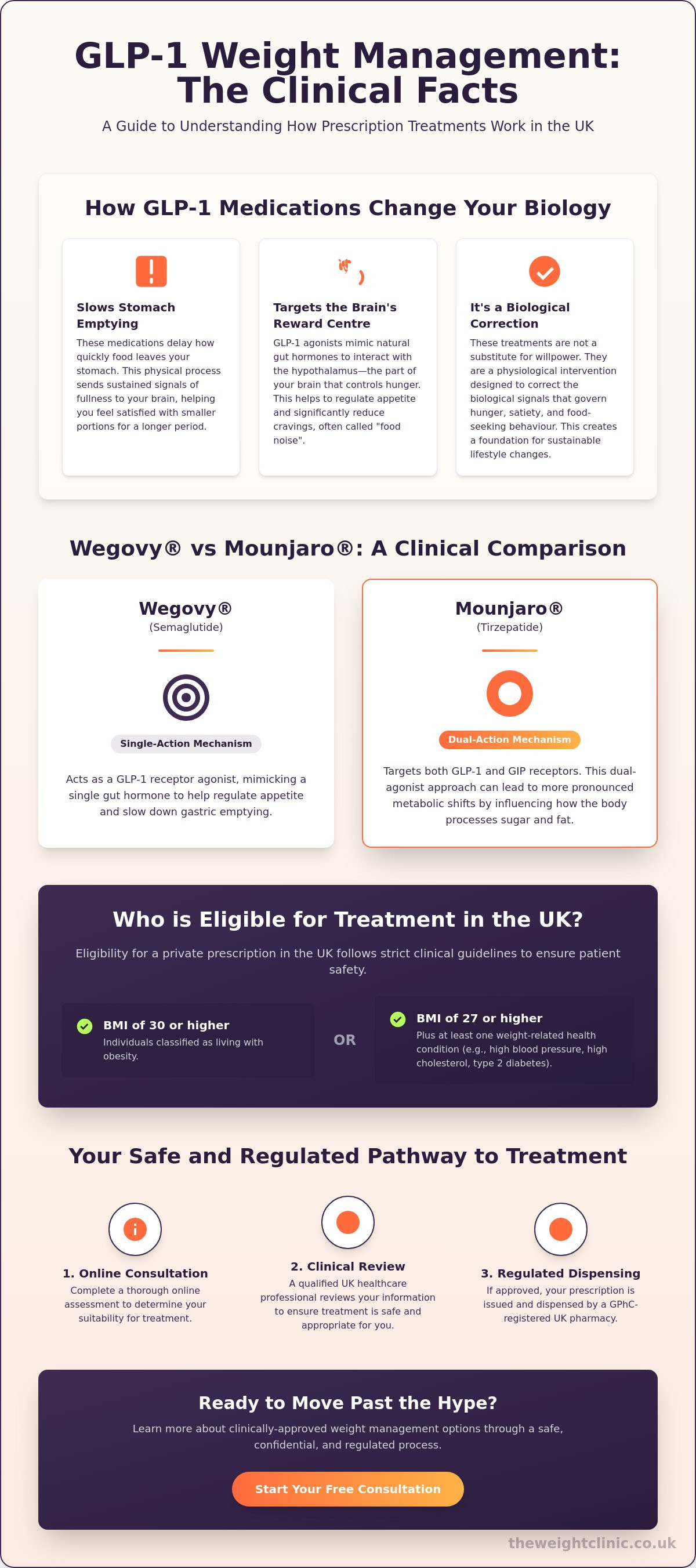
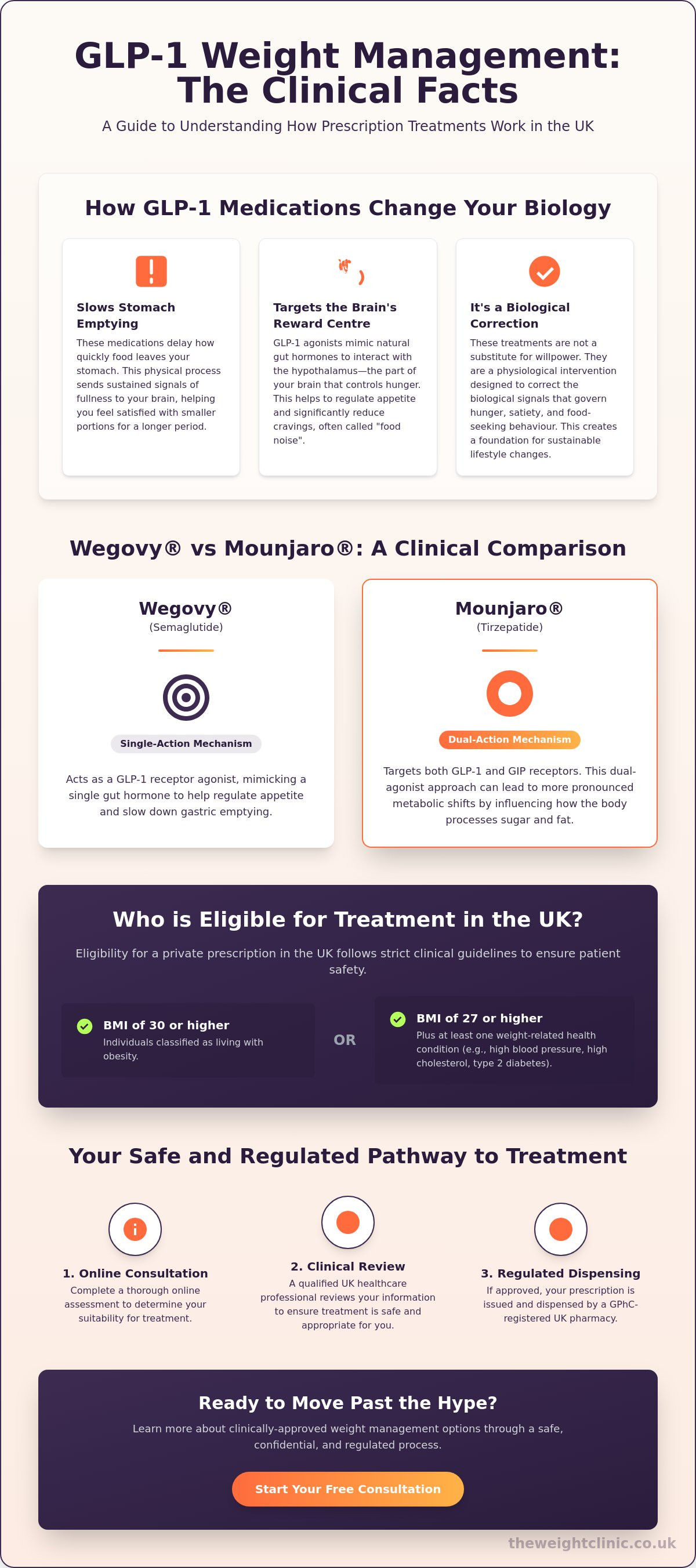
Forget the tabloid nicknames. To understand the clinical reality of GLP-1 weight loss UK, you need to look at biology, not branding. GLP-1 stands for Glucagon-like peptide-1. It is a hormone your gut produces naturally after you eat. These medications are GLP-1 receptor agonists. This means they don't just supplement your hormones; they mimic them at significantly higher, pharmacologically active levels.
The primary job of these medications is twofold. First, they help regulate insulin production. Second, they slow down gastric emptying. This is the physical process of food leaving your stomach. By delaying this, the medication keeps you physically full for longer periods. Essentially, GLP-1 acts as a biological mimic that targets the brain’s reward centre to reduce hunger and dampen the persistent cravings often described as "food noise". It is a physiological intervention, not a test of willpower.
The Evolution of Weight Loss Injections in the UK
These treatments didn't appear overnight. Clinicians have used them for over a decade to manage Type 2 diabetes. During that time, doctors noticed a consistent side effect: significant weight loss. This observation shifted the clinical focus toward developing specific obesity treatments. We've moved from early daily injections like Liraglutide to modern, more effective weekly options. Today, medications like Wegovy (Semaglutide) represent a more refined and convenient approach to long-term weight management.
GLP-1 vs. GIP: Understanding the Dual Action
Not all injections work the same way. Traditional GLP-1s target a single hormone receptor. However, the landscape changed in 2026 with the wider availability of "dual-agonist" treatments. Mounjaro (Tirzepatide) is the primary dual-action alternative currently available in the UK. It targets both GLP-1 and GIP (Glucose-dependent insulinotropic polypeptide) receptors.
GIP works alongside GLP-1 to improve how the body breaks down sugar and manages fat cells. By hitting both receptors simultaneously, dual-agonists often achieve more pronounced metabolic shifts than single-action medications. This is a significant shift in the clinical landscape. It isn't about choosing the "strongest" jab; it's about using the most advanced tools available to correct biological signals. Every patient requires a unique clinical review to determine which mechanism fits their health profile.
The Biological Shift: How GLP-1 Changes Your Relationship with Food
Weight loss is frequently framed as a moral failing or a lack of discipline. It isn't. When we discuss GLP-1 weight loss UK, we are talking about a fundamental shift in your internal chemistry. These medications don't provide willpower; they alter the communication between your gut and your hypothalamus. This is the specific part of the brain responsible for managing hunger and satiety. By correcting these biological signals, the medication removes the constant, exhausting struggle against your own body. It is a physiological intervention for a physiological problem.
The physical mechanism is simple but highly effective. GLP-1 agonists slow down gastric emptying. Your stomach takes longer to process food, which sends a sustained signal of fullness to your brain. You aren't just "trying" to eat less; you physically feel as though you have already eaten enough. This is a metabolic correction, not a mental shortcut. It changes the physical reality of how your body handles every meal. It stops the cycle of deprivation and replaces it with a regulated, predictable response to nutrition. This shift allows you to make better choices because you are no longer fighting a losing battle against hunger hormones.
Success with these treatments requires a clinical foundation. It is about correcting a system that is currently out of balance. If you want to see if this approach is right for your biology, you can start a clinical consultation today to begin your assessment.
Silencing the "Food Noise"
Many patients struggle with "food noise". This is the intrusive, constant mental chatter about the next meal or the snack in the cupboard. It is a biological urge to seek high-calorie rewards, driven by dopamine. GLP-1 agonists dampen this response. When the noise stops, food becomes fuel rather than an obsession. It provides a profound sense of relief, letting you focus on your day without your brain constantly scanning for the next calorie hit.
Blood Sugar and Energy Regulation
Stability is key to success. The medication prevents the dramatic blood sugar spikes and crashes that usually trigger binge eating. By regulating insulin production, it creates a steady energy supply. When comparing the main GLP-1 medications, the goal is always to improve insulin sensitivity. This regulation makes it easier to maintain a healthy lifestyle without the physical agony of constant hunger pangs. It isn't a miracle; it's medicine doing its job.
Mounjaro vs Wegovy: Comparing the Main GLP-1 Medications in the UK
Choosing between treatments isn't about following a trend. It's about matching clinical evidence to your biological needs. When looking at GLP-1 weight loss UK, two names dominate the conversation: Wegovy and Mounjaro. Both medications are administered via a simple, pre-filled injection pen once a week. Whilst both are highly effective, clinical trials show Tirzepatide often yields higher weight loss percentages than Semaglutide alone. It's a choice between a single-action established standard and a newer dual-action mechanism.
Wegovy (Semaglutide): The Established Standard
Wegovy was the first major weekly GLP-1 approved for weight loss in the UK. Its reputation is built on the STEP clinical trials. These studies showed that participants achieved an average weight loss of 15% over 68 weeks when combined with lifestyle changes. Safety is managed through a steady titration schedule. You start at a low 0.25mg dose and gradually increase over several months to the 2.4mg maintenance dose. This process allows your body to adjust to the hormone mimic, reducing the risk of gastrointestinal side effects. For many, Wegovy treatment remains the reliable, proven choice for long-term weight management.
Mounjaro (Tirzepatide): The Dual-Agonist Powerhouse
Mounjaro is the newer alternative that has shifted clinical expectations. It isn't just a GLP-1; it is a dual-agonist. By targeting both GLP-1 and GIP receptors, it tackles metabolic regulation from two angles. The SURMOUNT trials highlighted its efficacy. Data showed that participants on the highest dose achieved up to 22.5% weight loss. This GIP integration doesn't just boost weight loss; it also helps manage how your body processes sugar and fat. This dual action may help some patients reach their goals more efficiently. You can explore the specifics of this medication on our Mounjaro treatment page.
The Future: Foundayo (Orforglipron) and Oral Options
The landscape is shifting toward more accessible formats. We are moving beyond injections toward daily tablets. Following the recent UK drug regulator approval of oral options in June 2026, Foundayo (Orforglipron) is the next major development. This is a non-peptide, oral GLP-1 currently in the pipeline. It offers a daily pill alternative for those with a needle phobia or those who simply prefer the convenience of a tablet. You can find more Foundayo information as we monitor its clinical rollout in the UK.
Eligibility and Safety: Who Can Actually Access GLP-1 Treatment in the UK?
GLP-1 medications are not a lifestyle accessory. They are prescription-only drugs designed for patients with a clear clinical need. In the UK, eligibility is strictly defined by NICE guidelines. To access GLP-1 weight loss UK services, you generally need a Body Mass Index (BMI) of 30 or above. This threshold drops to 27 if you live with weight-related comorbidities such as hypertension, Type 2 diabetes, or high cholesterol.
Let's be clear: these treatments are not for vanity weight loss. They are not meant for dropping a few pounds before a holiday or wedding. Using them outside of clinical guidelines is unsafe and medically inappropriate. Safety checks are mandatory. We cannot prescribe these medications if you have a personal or family history of medullary thyroid cancer or a history of pancreatitis. These contraindications exist to protect your health, not to create unnecessary barriers.
The Importance of BMI in Clinical Review
We use BMI because it is an efficient screening tool. It isn't a perfect measure of health, but it provides a necessary baseline for clinical safety. For some ethnic backgrounds, these thresholds change. South Asian, Chinese, and Black-African patients often face metabolic health risks at lower BMI levels. Clinical reviews adjust for this reality to ensure equitable care. You can read more about these standards and the science behind them in our Medical Weight Loss UK pillar.
Managing Side Effects: The Reality
Side effects are common, especially during the induction phase. You might experience nausea, diarrhoea, or constipation as your body adjusts to the hormone mimic. This is why titration is non-negotiable. We start you on the lowest possible dose and increase it slowly over several months. It's a slow-burn process, not a race. This "this, not that" approach ensures your body adapts safely and minimises discomfort. Whilst most symptoms are mild and temporary, you must identify rare but serious risks. If you experience severe, persistent abdominal pain, it could indicate gallbladder issues or pancreatitis. In these rare cases, treatment must stop immediately.
Safe weight management requires professional oversight and a commitment to clinical standards. If you meet the criteria and are ready for a thorough clinical assessment, you can start an online consultation to see if treatment is suitable for your health profile.
Navigating the UK Prescription Process with a Regulated Pharmacy
The internet is currently flooded with "cowboy" sellers offering cut-price injections. Avoid them. A legitimate GLP-1 weight loss UK service requires a GPhC-registered pharmacy. This isn't a standard retail transaction; it's a medical pathway. You aren't just buying a product; you are entering a regulated clinical process. If a website doesn't require a thorough medical assessment, it isn't a pharmacy. It's a risk to your life.
The online consultation is a legal medical assessment. It isn't a checkout form or a hurdle to clear. A qualified prescriber must personally approve your treatment. They review your BMI, your health history, and any potential contraindications. This clinical gatekeeping ensures that medications like Wegovy or Mounjaro are actually safe for you. If a prescriber hasn't signed off on your specific case, the medication is unregulated and potentially dangerous.
Stability is another clinical reality. These medications are biologics. They are sensitive to temperature. Legitimate pharmacies use temperature-controlled, cold-chain delivery to ensure the medication remains effective. If your supplier sends a pen in a standard envelope without cooling, the active ingredients will degrade. Precision matters from the manufacturer to your doorstep. Don't settle for anything less than pharmaceutical-grade logistics.
Step-by-Step: From Consultation to Delivery
The process is designed for safety and efficiency. Start by completing a secure medical questionnaire. Be blunt and truthful about your health. A UK-registered pharmacist or doctor will perform a clinical review, usually within 24 hours. Once approved, your treatment is dispensed and shipped. We use discreet packaging. Your medical business remains private. For a deeper look at how this works without your local doctor, read our guide on Weight Loss Treatment Without GP.
Why Regulation Matters
Check the GPhC registry. Look for the valid pharmacy logo on the website and click it. This is your safety net. "Fake" pens found on social media and unregulated sites are a rising threat in 2026. These counterfeits often contain the wrong dose or entirely different substances. The Weight Clinic is committed to safe, UK-sourced medication only. We don't cut corners on clinical standards. Your health deserves the protection of a regulated provider. It's time to stop gambling with unregulated sellers and choose a pharmacy that prioritises your safety. You can start your clinical consultation today to begin the process properly.
Securing Your Path to Sustainable Weight Management
GLP-1 medications represent a significant shift in how we treat obesity. They aren't about "trying harder"; they're about correcting the hormonal signals that drive hunger. Whether you choose Wegovy or Mounjaro, success depends on biological suitability and professional guidance. Understanding the clinical reality of GLP-1 weight loss UK means moving away from social media trends and toward evidence-based medicine.
Safety remains the priority. You must meet the BMI requirements and pass a thorough clinical review to ensure treatment is appropriate for your health profile. The Weight Clinic provides a regulated, pharmacy-led service that prioritises your well-being. We are a UK-registered pharmacy (GPhC) where every treatment is prescribed by qualified UK clinicians. We ensure your medication stays stable and effective through discreet, cold-chain delivery.
Don't leave your metabolic health to chance or unregulated sellers. If you're ready to explore a clinical approach to weight management, we're here to guide you through the process safely. Check your eligibility for GLP-1 treatment at The Weight Clinic today. You deserve a weight loss journey built on clinical evidence and professional care.
Frequently Asked Questions
Is GLP-1 weight loss permanent?
Weight loss is only permanent if you maintain the metabolic and lifestyle changes established during treatment. These medications correct biological signals whilst you use them; they don't permanently "fix" your metabolism. If you stop the medication and return to previous eating patterns, your hunger hormones will likely return to their baseline levels. This often leads to weight regain. View this treatment as a long-term tool for biological regulation rather than a one-time cure.
Can I get GLP-1 weight loss injections on the NHS?
Yes, but the eligibility criteria are exceptionally strict and waiting lists are often long. To qualify for GLP-1 weight loss UK treatment via the NHS, you typically need a BMI of 35 or higher, or 30 with specific comorbidities. You must also be referred to a specialist Tier 3 weight management service. Many patients choose regulated private clinics to avoid these administrative hurdles and access treatment more quickly under professional supervision.
What happens if I miss a dose of my GLP-1 medication?
Take the missed dose as soon as you remember, provided it is within five days of your scheduled day. If more than five days have passed, skip the missed dose entirely and wait for your next regularly scheduled injection. Never take a double dose to make up for a missed one. If you miss more than two consecutive doses, consult your clinician. You may need to restart at a lower dose to avoid severe side effects.
Do I need to follow a specific diet whilst taking GLP-1s?
The medication works best when paired with a calorie-controlled, high-protein diet. Whilst the drug reduces your appetite, the quality of your nutrition still matters for maintaining muscle mass and energy levels. Focus on nutrient-dense foods and stay hydrated. The medication makes it easier to stick to a deficit, but it doesn't replace the need for a balanced approach to eating. It is a metabolic aid, not a license to ignore nutrition.
How long does one GLP-1 pen last?
Most GLP-1 pens are designed to last for exactly four weeks. Each pen typically contains four pre-measured weekly doses. You'll use one pen per month as you move through your titration schedule or stay on a maintenance dose. Always check the specific instructions for your brand, as some pens are single-use whilst others are multi-dose. Ensure you store your pens correctly in the fridge to maintain the stability of the active ingredients.
Can I drink alcohol whilst taking GLP-1 weight loss injections?
You can drink alcohol, but you should do so with extreme caution. Alcohol can worsen common side effects like nausea and vomiting. It also increases the risk of low blood sugar, which can be dangerous when combined with metabolic medication. Alcohol provides empty calories that can slow your overall progress. Many patients find their desire for alcohol naturally decreases whilst on treatment, but it's best to keep intake minimal for the best clinical results.
Will I gain all the weight back if I stop the medication?
Weight regain is a significant risk if you stop the medication without a maintenance plan. Clinical data suggests that many patients regain a portion of their lost weight once the biological appetite suppression is removed. This happens because the underlying hormonal signals return to their original state. Successful long-term maintenance requires a transition plan. This often involves continued lifestyle support or a tapered maintenance dose under the guidance of your prescribing clinician.
Are GLP-1 injections painful?
Most patients report very little discomfort during the injection process. The needles used in pens like Wegovy and Mounjaro are exceptionally fine and short. They are designed for subcutaneous injection, meaning they only enter the fatty tissue just beneath the skin. You can inject into the abdomen, thigh, or upper arm. Most people find the sensation comparable to a quick pinch. It's a simple, fast process that becomes routine very quickly for the vast majority of users.
Disclaimer
The information in this article is for general educational purposes only and should not be taken as personal medical advice. Weight-loss treatments, including prescription medicines, may not be suitable for everyone and require a clinical assessment by an appropriately qualified healthcare professional. Do not start, stop or change any medication without speaking to a prescriber or healthcare professional. If you have urgent symptoms or feel unwell, seek medical advice promptly or contact NHS 111 / emergency services where appropriate.